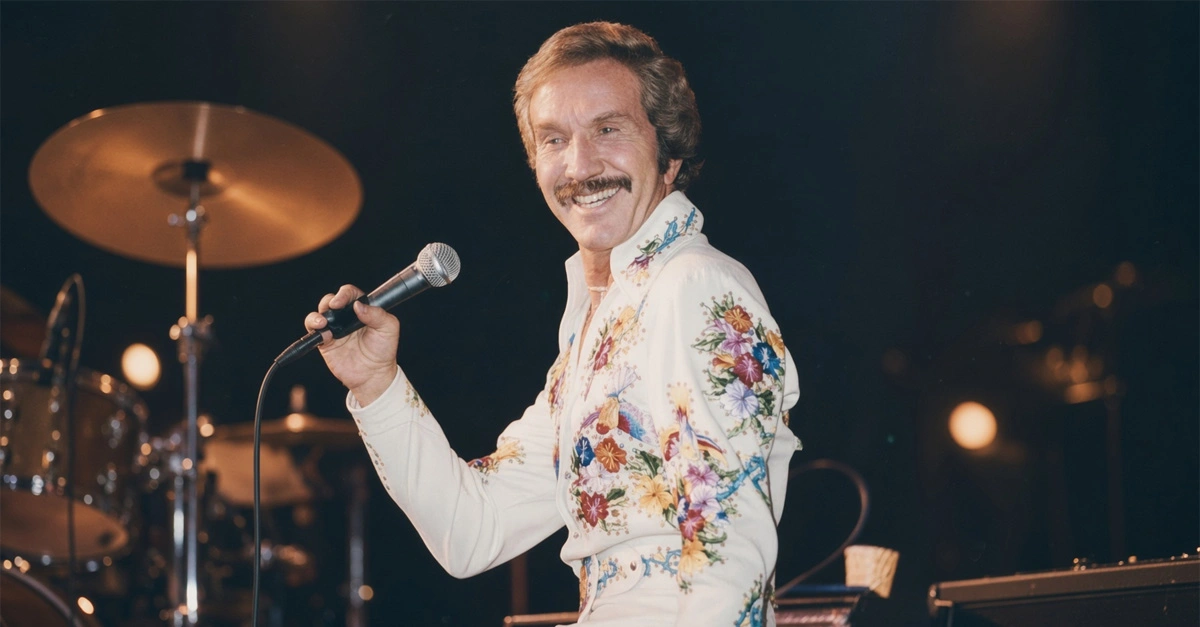
In 1981, Marty Robbins walked onstage the way he always had steady, composed, carrying stories older than the spotlight itself. No speech. No hint of finality. Just that unmistakable voice, smooth as desert wind, filling the room with the Western ballads that had made him a legend: “El Paso,” “Big Iron,” “My Woman, My Woman, My Wife.”
Between songs, he smiled. He spoke gently. He made the night feel normal. Yet some people in the audience noticed things others missed. He sat more often than before. His breath seemed shorter between verses. The pauses stretched not for drama, but for strength. The songs remained perfect. The man delivering them was quietly fighting something unseen.
Marty never announced a farewell tour. He never framed an ending. Heart trouble, which had first struck him in 1969 and led to an early triple bypass, simply made decisions for him. In early 1981 he suffered another attack. He canceled shows, rested, and returned a couple of months later. To most fans it looked like a temporary interruption. Only later did many understand it wasn’t just a break. Something had quietly shifted. The man who once raced stock cars at high speed between Opry appearances and wrote hundreds of songs was still performing, still racing occasionally, still carrying the same dignity but he was measuring his energy differently.
He kept going. In 1982 he scored a Top 10 country hit with “Some Memories Just Won’t Die.” In October of that year he was inducted into the Country Music Hall of Fame. Weeks later he was still on stage. One of his final public performances took place in early November 1982. There was no dramatic last show, no public goodbye. The lights simply went out without explanation when a third major heart attack struck in early December. After emergency surgery he died on December 8, 1982, at age 57.
Fans realized the truth too late: the goodbye had already happened softly, while the music was still playing. Robbins had spent more than three decades at the center of country music pop crossovers in the 1950s, classic Western storytelling in the 1960s, consistent chart presence, and a parallel life as a NASCAR driver. He never made the struggle the story. He let the songs carry what needed to be said.
What remains is the catalog. The voice that once filled rooms with tales of outlaws, lost love, and desert trails continues to do so. The pauses that once gave him a moment of strength now give listeners space to hear the stories clearly. Marty Robbins did not stage a farewell. He simply kept singing until the music, not the man, was what stayed. Some memories, as he himself recorded near the end, just won’t die.